
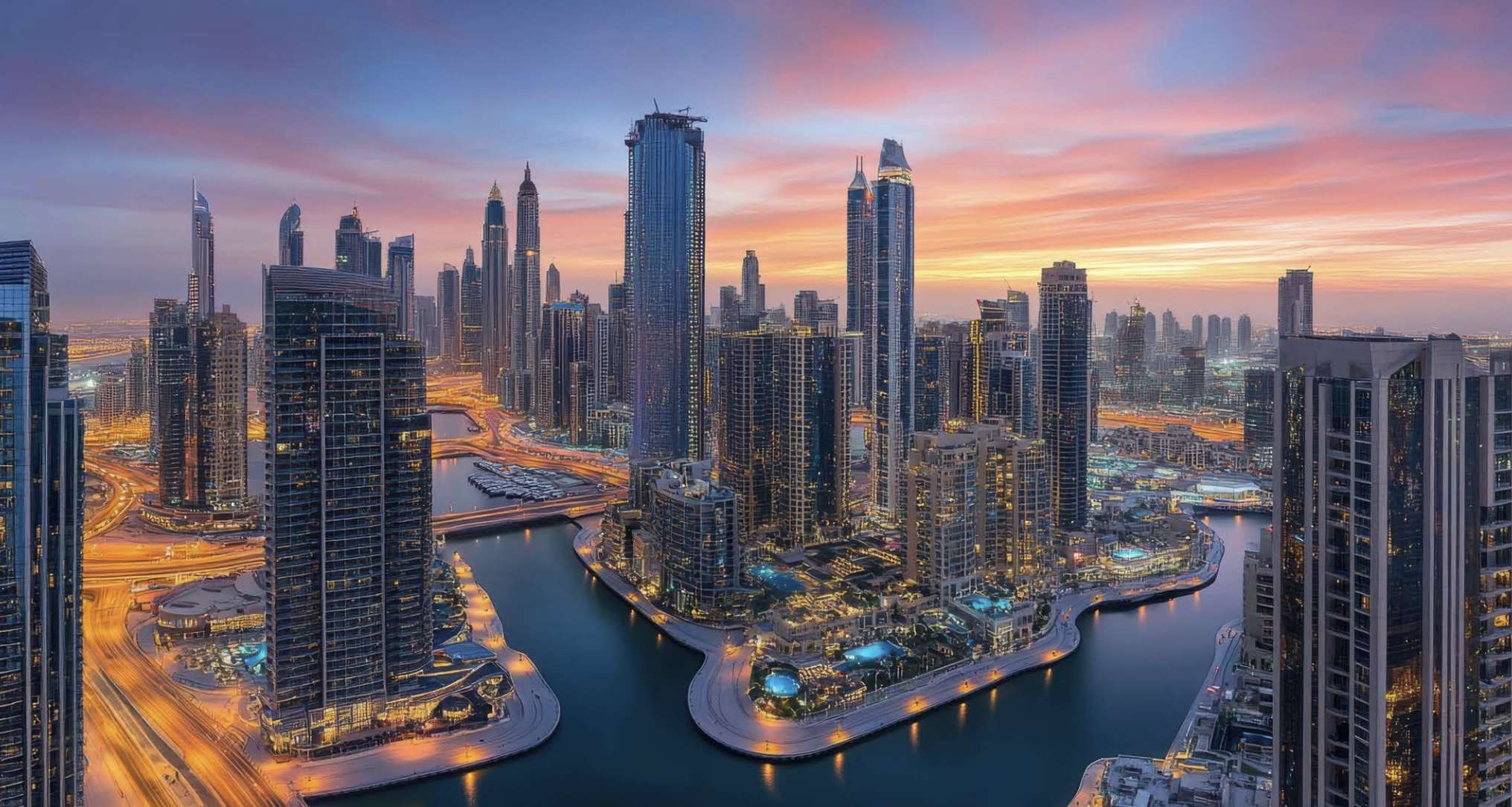
CS Global Partners’ newly released Opportunity Index 2026 paints a nuanced picture of the Middle East: a region of extraordinary ambition and sovereign wealth deployment, yet one where geopolitical tensions can erase gains in moments.
The second annual edition of the Opportunity Index, drawing on comprehensive data from the World Bank Open Database, evaluates economic opportunity across nations. The index outlined that, of the three Gulf states assessed, the United Arab Emirates performs strongest, ranking 7th globally with a score of 72.3, the highest placement in the entire Middle East.
Saudi Arabia follows at 31st with a score of 63.1, and Qatar places 36th at 61.5. Taken together, these rankings reflect genuine and sustained economic progress. Across all three nations, non-oil sectors now dominate growth, a structural shift that would have seemed aspirational just a generation ago.
The Opportunity Index sheds light on the Middle Eastern countries and adds that each Gulf state tells a distinct story of transformation. In Saudi Arabia, Vision 2030, the sweeping national reform agenda launched by Crown Prince Mohammed bin Salman, continues to reshape the kingdom from the ground up.
Non-oil GDP has now crossed the 50% threshold, a milestone that marks a genuine inflexion point in the Saudi economy’s composition. Mega-projects in tourism and entertainment, from NEOM to the Red Sea coastal resorts, are transforming the physical landscape, while new investor protection laws and streamlined business regulations are lowering costs and signalling openness to international capital.
Qatar, meanwhile, takes a different but equally deliberate approach, channelling the revenues of its extraordinary liquefied natural gas reserves into a diversification agenda spanning artificial intelligence, logistics, and maritime industries, administered with institutional precision through the Qatar Investment Authority, one of the world’s largest and most strategically sophisticated sovereign funds.
On the other hand, the index outlined that in the UAE, sovereign funds such as Mubadala are investing at scale in technology, renewables, and infrastructure. Dubai, in particular, has solidified its status as a global financial and lifestyle hub, drawing high-net-worth individuals with world-class amenities, an internationally competitive tax environment, and business-friendly policies designed to attract and retain global talent.
Yet for all the scale and seriousness of these ambitions, the Opportunity Index 2026 delivers a warning that investors, families, and policymakers cannot afford to overlook. “Opportunity in the Middle East is real and substantial, but it must be approached with eyes wide open,” the report added.
Disruptions across the Middle East
The Index also talked about the disruptions across the Middle East in recent times. As per the index, recent Iranian drone and missile strikes on Gulf targets, including attacks on critical infrastructure and airspace disruptions that have affected international aviation, have exposed, with uncomfortable clarity, the vulnerability of the very non-oil activities that these economies have staked their futures upon.
The diversification programmes of the UAE, Saudi Arabia, and Qatar all depend, to varying degrees, on continued inflows of foreign direct investment, the confidence of international business, and access to global capital markets. A sustained escalation of regional conflict threatens all three simultaneously.
The Index is candid about what this means in practice. “Sovereign wealth is being deployed with genuine strategic vision,” the report states, “yet recent events remind us that even the most carefully engineered diversification programmes can face sudden shocks.”
The report goes further still, addressing high-net-worth individuals considering residency in the region directly: “HNWIs considering residency here should factor geopolitical resilience into their planning alongside the undeniable upside.” This is not boilerplate caution. It is a considered, expert assessment from a firm that holds exclusive advisory mandates for two sovereign governments and works at the highest levels of international citizenship and residency planning.
Planning for Opportunity, and for Disruption
The Opportunity Index 2026 is built on the conviction that true opportunity lies not in the sheer scale of an economy’s output, but in the quality and durability of the environment in which individuals and businesses can sustainably thrive.
By that measure, the Gulf states offer something genuinely compelling: growing economies, deepening diversification, world-class infrastructure, and increasingly sophisticated legal and regulatory frameworks designed to attract and protect international investment.
But the Index is equally clear that sustainability requires resilience, and that resilience, in the context of the Middle East, must be actively planned for rather than passively assumed. For those weighing the region as a base for their families, their businesses, or their capital, the report underscores a straightforward but important principle: the upside and the risk must be assessed together, not separately.
For investors and families navigating this balance, Citizenship by Investment and Residency by Investment programmes offer a structured and professionally guided route to accessing the Middle East’s opportunities while building the geographic diversification that any serious long-term plan requires.
“Sovereign wealth is being deployed with genuine strategic vision, yet recent events remind us that even the most carefully engineered diversification programmes can face sudden shocks,” as per the index.
The Opportunity Index 2026’s verdict on the Middle East is ultimately one of cautious optimism, a phrase the report uses deliberately and earns carefully.
The transformation underway across the UAE, Saudi Arabia, and Qatar is real. The capital behind it is substantial. The institutional intent is credible. And the opportunities it is generating for high-net-worth individuals, investors, and businesses willing to engage seriously with the region are, as the Index states, substantial.
